



Ambisius vs Softr — which one actually gives you a complete working business app?
Softr Looks Great. But What Does It Actually Take to Get It Working?
Most comparison posts focus on features. This one focuses on what the day-to-day experience actually looks like for a small business owner.
Softr has been gaining attention in the no-code space — polished, promising, and genuinely useful in the right context. But if you're a business owner who needs a real operational system, the right question isn't "what can Softr do?" It's "what does it take to get Softr working for my business?"
In this post, we break down how Ambisius and Softr compare on setup complexity, built-in business logic, and whether the tool can stand on its own — or needs other tools to function.
What Is Softr?
A polished front-end builder — but your data still lives somewhere else.
Softr is a no-code platform that lets you build web apps, client portals, and internal tools — primarily by connecting to an existing data source like Airtable or Google Sheets and layering a user interface on top of it. It produces professional-looking interfaces quickly, and agencies and startups use it to build membership sites, client portals, and dynamic directories.
Softr doesn't manage your data — it displays it. Your actual data still lives in Airtable, Google Sheets, or another connected source, which means you need to set up, maintain, and pay for that tool separately before Softr becomes useful at all.
-
Great visual outputSoftr produces clean, shareable web pages and client portals quickly — its visual output is genuinely polished.
-
Front-end onlySoftr creates the interface — the pages, buttons, and forms. The actual data lives in Airtable, Google Sheets, or another connected source.
-
Two tools, two subscriptionsTo use Softr effectively, you're maintaining two platforms — and paying for both. When something breaks, you're debugging across two systems.
What Is Ambisius?
One complete system — data, logic, and interface — built from a single conversation.
Ambisius is an AI-powered no-code app builder built specifically for small and medium businesses. You don't connect it to another tool, configure a database separately, or drag and drop interface components. You simply chat with an AI — describe what your business needs — and the entire app is built for you automatically.
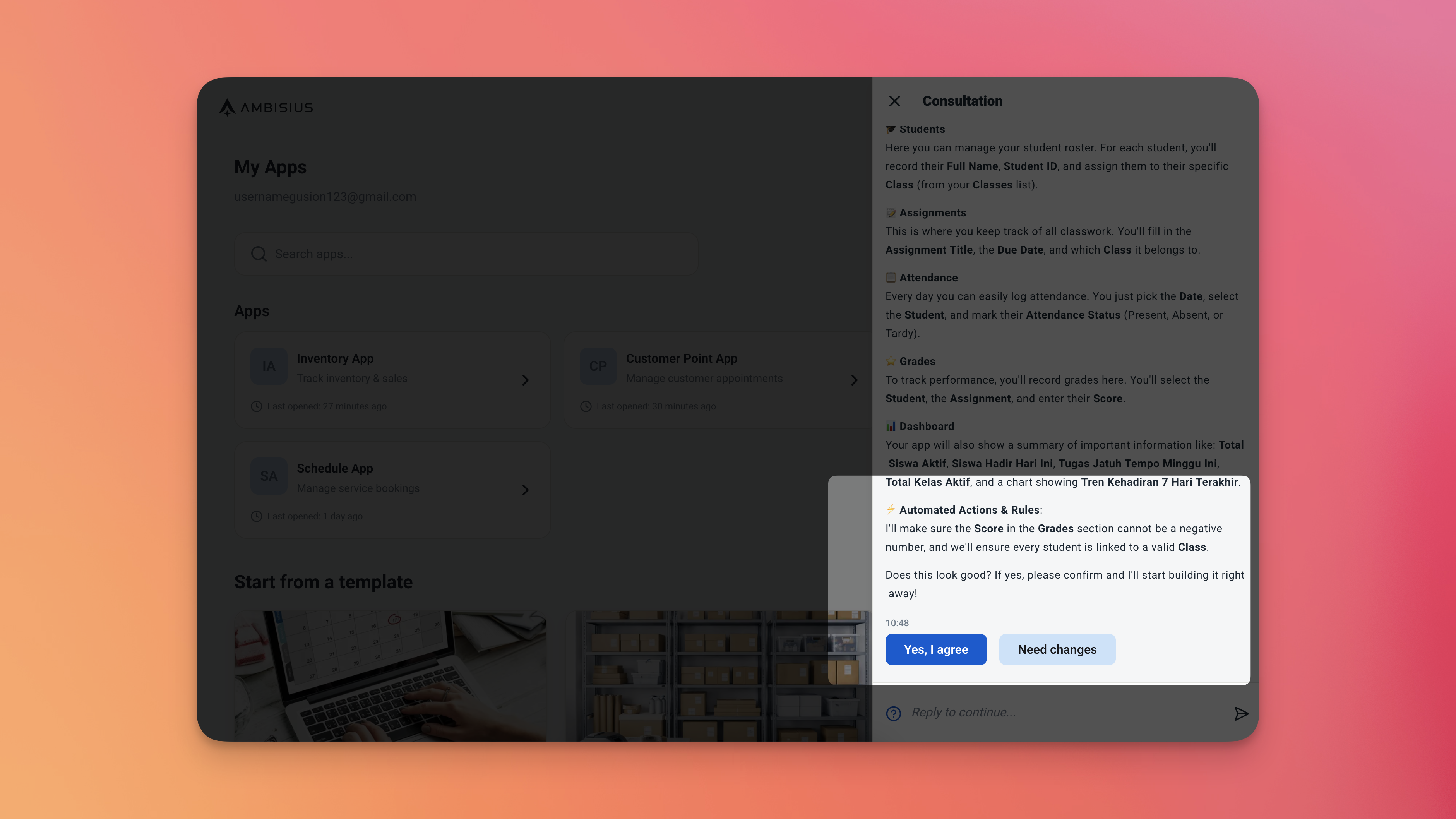
Describe your business in plain language — Ambisius builds the entire app, data structure, logic, and all, in minutes.
-
Fully self-containedData, business logic, and interface all live in one place. No external data source required, nothing to connect, nothing to sync.
-
No technical background neededBuilt for business owners currently managing operations on spreadsheets or WhatsApp who want a proper system without hiring a developer.
-
One subscription, one platformInventory tracking, appointment scheduling, invoicing, event registration — all handled through a single conversation, on a single platform.
Head-to-Head Comparison
How the two tools stack up across the things that matter most to a small business owner.
| Feature | Ambisius | Softr |
|---|---|---|
| Built for | Small business owners (SMEs) | Agencies, startups, tech-savvy builders |
| Setup | Chat with AI — app ready in minutes | Build UI in Softr + manage data in Airtable/Sheets separately |
| Requires external data source | ❌ No — fully self-contained | ✅ Yes — Airtable or Google Sheets required |
| Technical skill needed | None | Moderate — requires understanding of data sources and UI blocks |
| Auto Calculation | ✅ Built-in | ❌ Handled in Airtable/Sheets — not in Softr |
| Data Relations | ✅ Built-in | Limited — depends on data source setup |
| Validation & Error Prevention | ✅ Built-in (range, overlap, uniqueness) | ❌ Handled in data source — not in Softr |
| Team Collaboration | ✅ Per-menu access control | ✅ User groups and permissions |
| Notifications / Alerts | ✅ Condition-based smart alerts | Limited — basic email notifications |
| Customer-Facing Sharing | ✅ Publish as customer-facing app | ✅ Strong — core use case |
| Mobile App | ✅ iOS, Android, PWA | ✅ Responsive web — no native mobile app |
| All-in-one (data + logic + UI) | ✅ Yes | ❌ No — UI only, data lives elsewhere |
| Ready-Made Business Templates | ✅ Inventory, Appointments, Invoices, Events | ✅ Portals, directories, dashboards |
| Pricing model | Credit-based — pay for what you build | Per-seat subscription + cost of data source tool |
Detailed Breakdown
Four areas where the difference between the two tools is most felt by a real business owner.
1. The Hidden Dependency: Softr Needs Another Tool to Work
This is the most important thing to understand before choosing Softr — and it's often glossed over in reviews. Softr is a front-end builder. It creates the interface your users interact with. But the actual data — your products, customers, bookings, invoices — doesn't live in Softr. It lives in Airtable, Google Sheets, or another connected source.
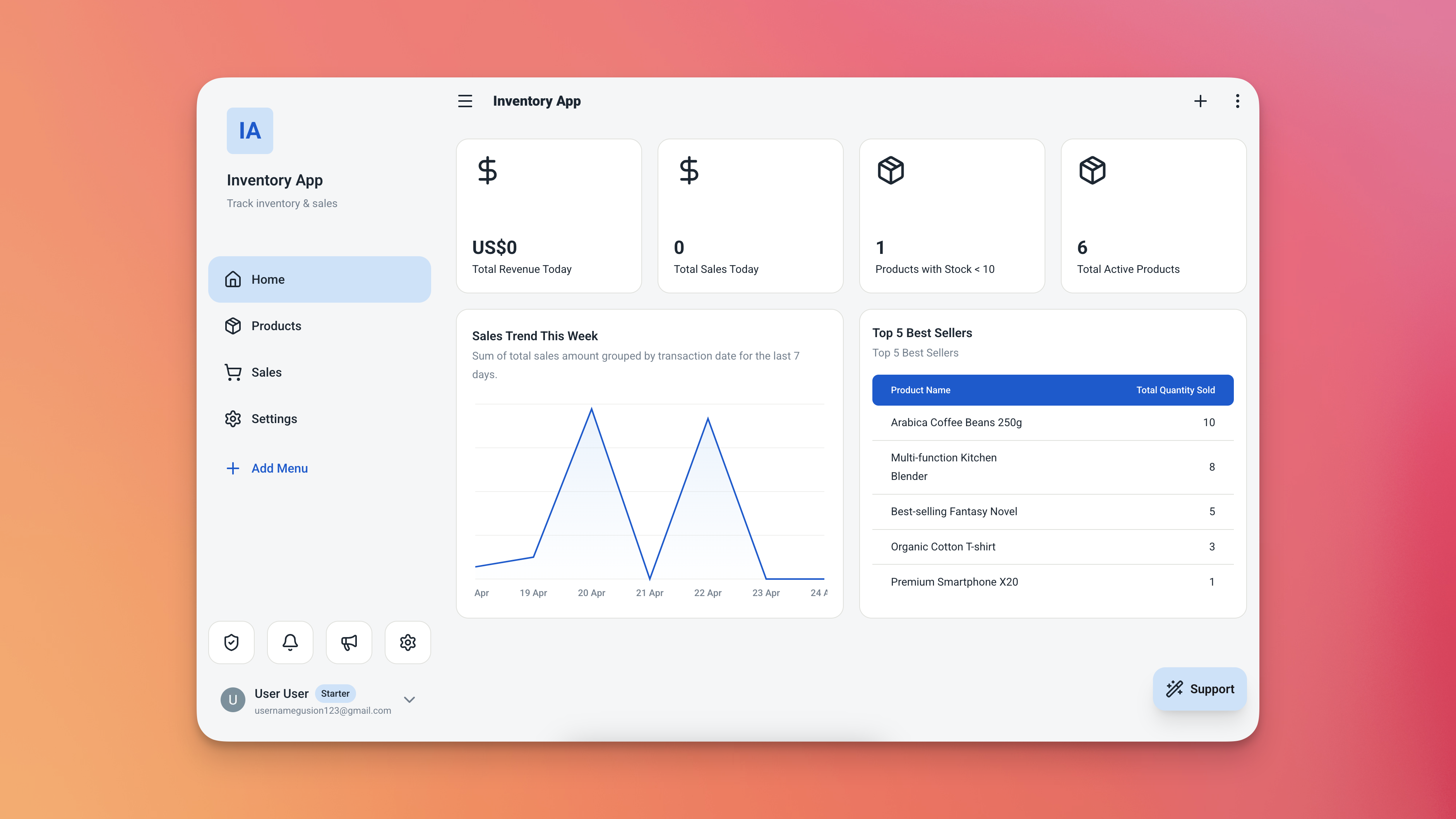
Ambisius keeps everything in one place — data, logic, and interface — with no external tools to connect or maintain.
That means before you can build anything useful in Softr, you need to set up and structure your data in Airtable or Google Sheets, configure relationships and formulas there, connect Softr to that data source, and then build your interface on top of it. You're not using one tool — you're maintaining two, paying for two, and debugging across two platforms when something goes wrong.
Ambisius has no such dependency. Your data, your logic, your interface — everything lives in one place, built by one AI conversation. There's nothing to connect, nothing to sync, and no second subscription to manage.
2. Business Logic: Where Does It Actually Live?
For a business app to work properly, it needs to enforce rules — preventing a sale when stock runs out, blocking a double-booking, automatically calculating an invoice total. In Softr, none of this lives in Softr itself. Formulas, validations, and automations are all configured in your data source. If you don't know how to set those up there, your Softr app will look great but behave like a basic form with no guardrails.
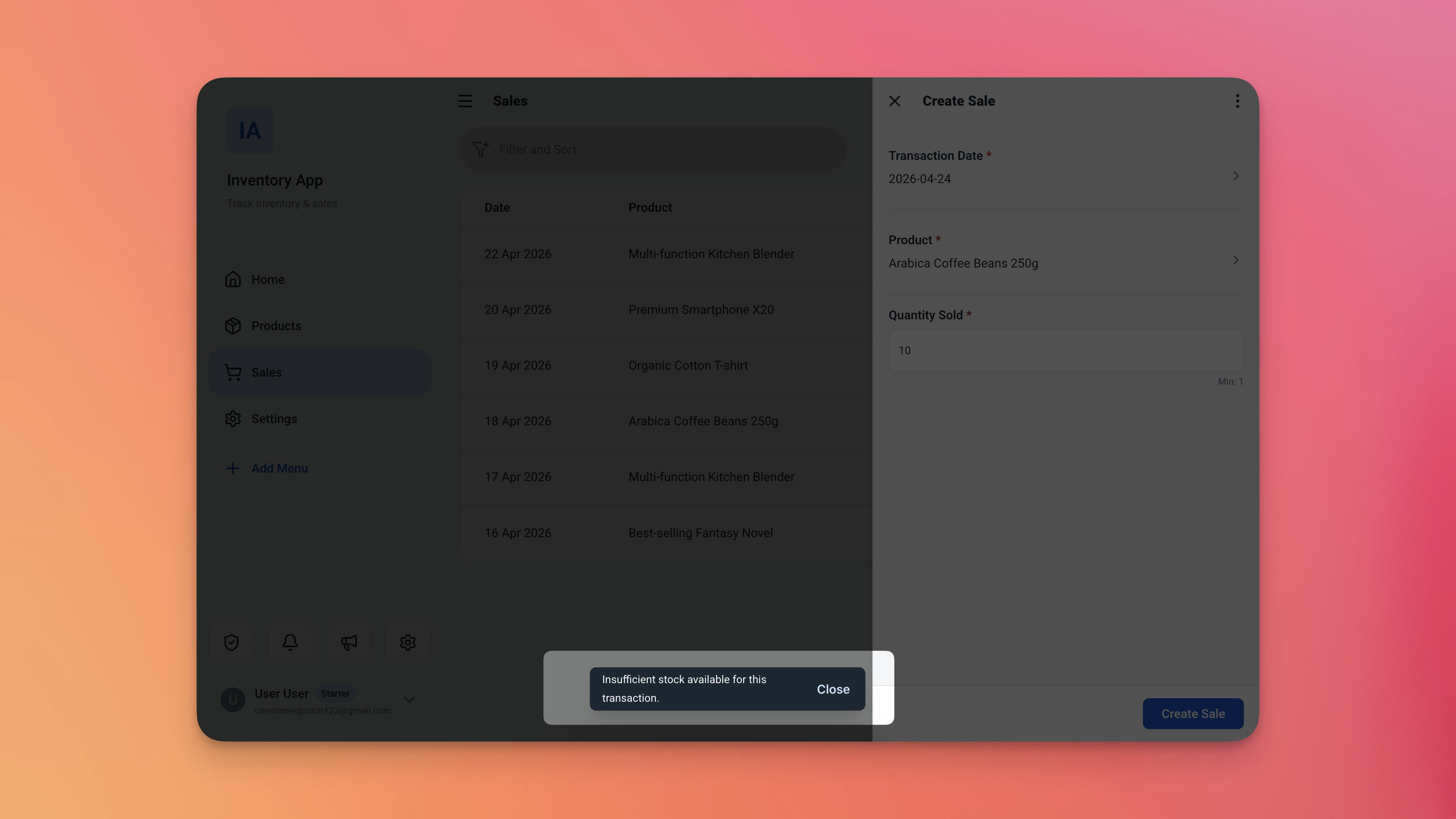
Business logic built in — Ambisius enforces your rules automatically, no external configuration required.
3. Setup Experience: One Tool vs. Two
Let's be honest about what getting started actually looks like with each tool. With Softr, the typical journey for a small business owner involves signing up for Softr, realizing you need a data source, signing up for Airtable, learning how Airtable structures data, building your data model there, connecting it to Softr, learning Softr's block-based builder, and then building your pages. That's two learning curves, not one.
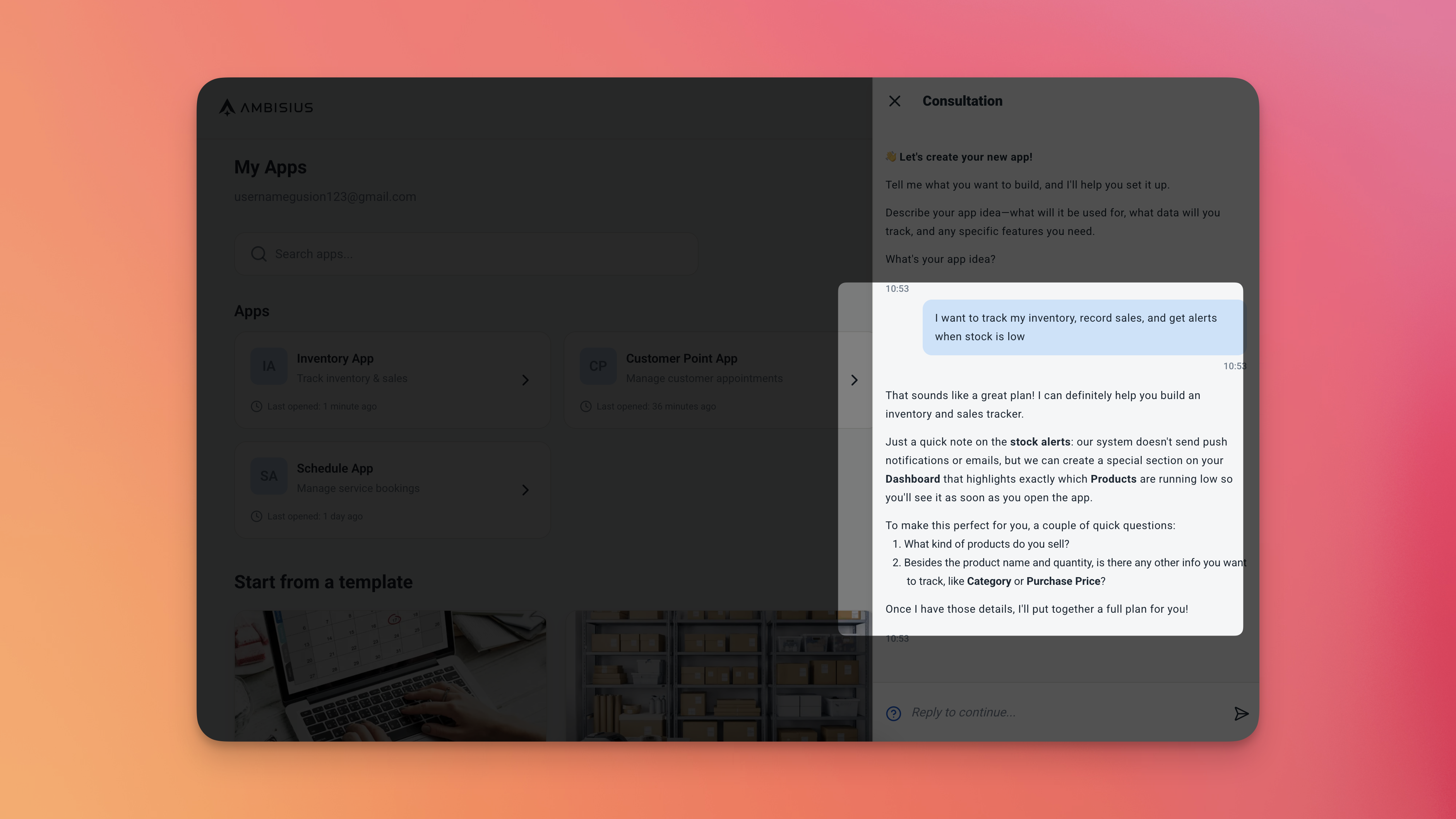
With Ambisius, describe what you need — the full app, including tables, validations, dashboard, and analytics, is ready in minutes.
-
1Open the appNo account setup maze. No data source to configure first. Just open Ambisius and start a conversation.
-
2Describe what you needTell the AI what your business does — "I want to track my inventory, record sales, and get alerts when stock is low." Plain language, no technical terms required.
-
3The AI builds the entire appTables, relationships, validations, dashboard, and analytics — all generated automatically. Nothing to connect, nothing to configure.
-
4Refine via chatNeed a supplier field? A monthly sales report page? Just ask — changes are applied instantly without rebuilding anything.
-
5Share with your teamInvite staff with per-menu access control — decide exactly what each person can see and do before they log in for the first time.
4. Pricing: One Subscription vs. Two
Softr's pricing is per-seat and tiered — and that's before factoring in the cost of Airtable, which has its own per-seat subscription. For a small business team of even 3–5 people, the combined cost of Softr + Airtable can add up quickly once you need features beyond the free tiers.
Ambisius uses a credit-based model — you pay for what you actually build and change. Chatting with the AI and exploring is free. Credits are only consumed when you confirm a change and the AI applies it. New users receive free starter credits to experience the product before committing. No second tool, no second subscription, no hidden seat costs.
With Ambisius, there's only one platform to pay for — and you only pay when you actually make changes to your app. Exploring and chatting with the AI is always free.
Verdict — Who Should Use What?
The right tool depends on what you're building and how much setup complexity you're willing to take on.
Choose Softr if:
-
You already use Airtable or Google SheetsIf your data is already structured in Airtable, Softr is a fast way to build a polished front-end on top of it without starting from scratch.
-
Your primary goal is a client-facing portalSoftr excels at membership sites, gated content, public directories, and user authentication — these are its core strengths.
-
You're building for an agency or startup contextSoftr is a strong fit for teams with technical capacity who need a polished public-facing product, not day-to-day SME operations.
Choose Ambisius if:
-
You want one complete systemData, logic, and interface — all in one place, built automatically. No connecting multiple tools, no second subscription, no second learning curve.
-
You're running on spreadsheets or WhatsApp right nowAmbisius is built exactly for this transition — from informal tools to a proper business system, without the setup headaches.
-
You need business rules enforced automaticallyStock validation, double-booking prevention, auto-calculated totals — built in, not configured manually in a separate tool.
-
You want precise control over staff accessShare the app with your team while staying in full control of who sees and does what — per menu, per action.
-
You need it to work on every device out of the boxAmbisius is fully responsive across iOS, Android, tablet, and desktop browser — the same app, everywhere your team works.
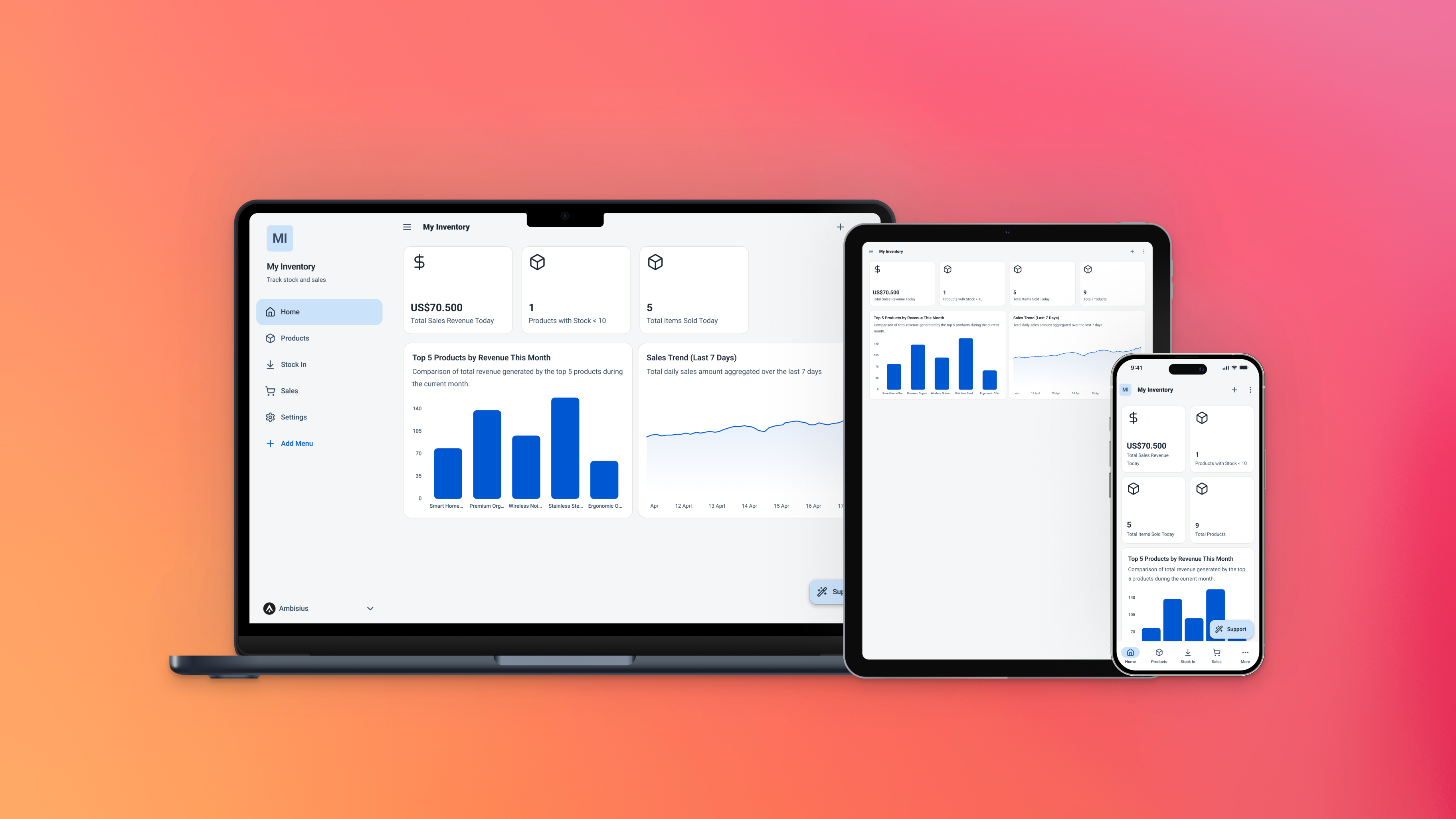
Ambisius works seamlessly across every device your team uses — phone, tablet, and desktop, out of the box.
Who Ambisius Is Built For
If you're running a business on spreadsheets, WhatsApp, or notebooks — Ambisius was made for you.
One App. Everything Included. Ready in Minutes.
No external data source. No second subscription. No complicated setup.
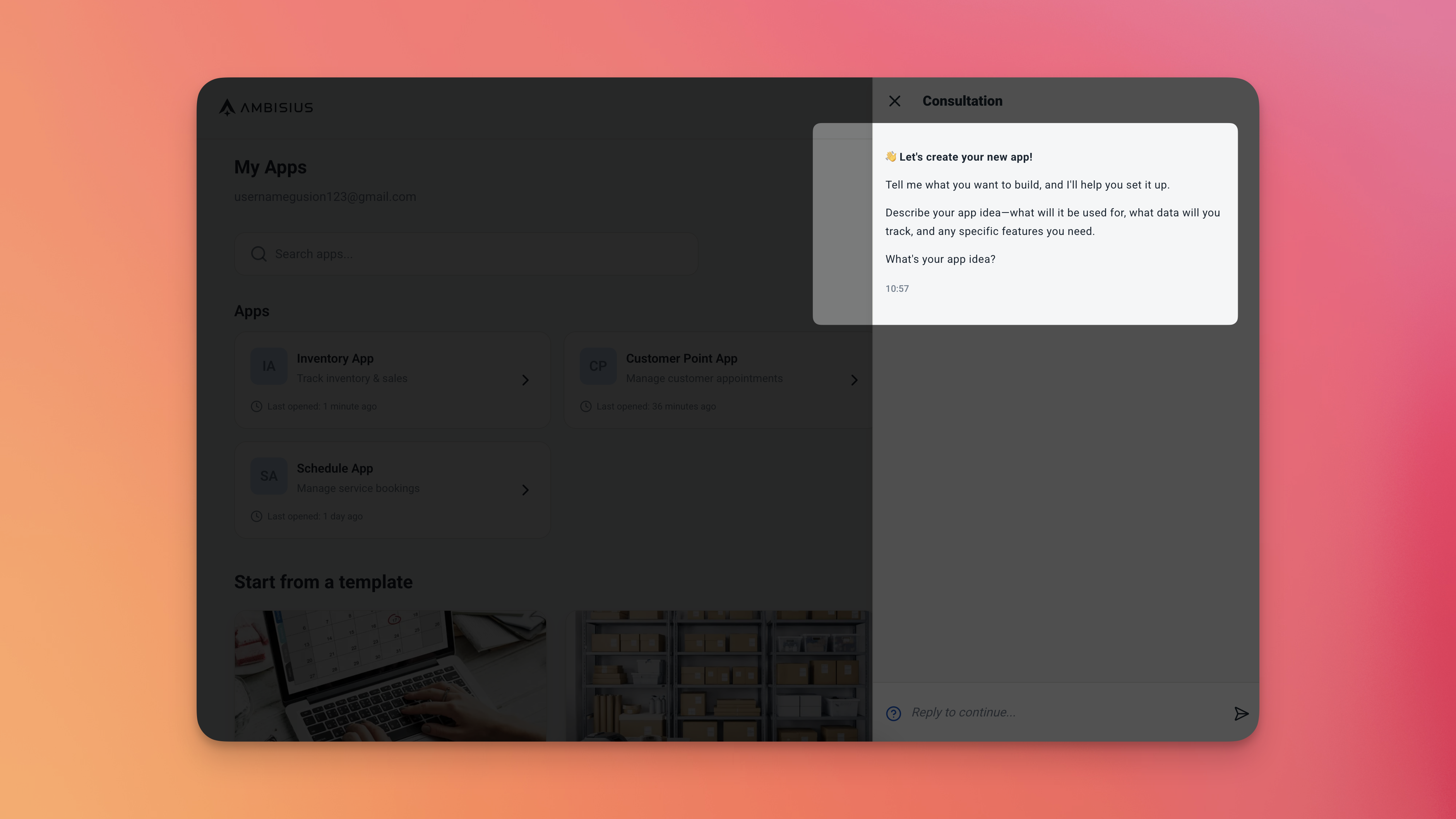
Start by describing your business — your complete app is ready before you finish your coffee.
Frequently Asked Questions
-
Does Softr work without Airtable?Softr can connect to Google Sheets, HubSpot, and a few other sources — but it always requires an external data source to function. It does not manage or store your data on its own. If you want an all-in-one solution where your data, logic, and interface live in the same place, Ambisius is the better fit.
-
Can I migrate from Softr to Ambisius?Yes. Describe your existing setup to Ambisius via chat and the AI will build an equivalent — or more complete — system for you. Since Ambisius handles data and logic natively, you'll likely end up with a more robust operational app in the process.
-
Is Ambisius free to use?Ambisius uses a credit-based model. Chatting with the AI and exploring the platform is free. Credits are only consumed when you confirm a change and the AI applies it to your app. New users receive free starter credits to get started without any upfront commitment.
-
Do I need coding skills to use Ambisius?No. Ambisius is built specifically for non-technical users. You describe what you need in plain language — the AI handles everything else. No formulas, no drag-and-drop configuration, no database setup required.
-
How long does it take to build an app on Ambisius?Most business apps — including tables, relationships, validations, a dashboard, and analytics — are ready in minutes. You can continue refining via chat and changes are applied instantly.
-
Is Softr good for small business operations?Softr can work for specific use cases — particularly client portals and public-facing pages. But for day-to-day operations like inventory management, appointment scheduling, or invoicing, Softr's dependency on an external data source adds significant setup complexity. For most small business owners, a self-contained tool like Ambisius is a more practical fit.
The Bottom Line
Softr is a strong tool — for teams that already have their data structured elsewhere and need a polished front-end on top of it. But for a small business owner who wants one complete working system without the setup complexity, the hidden dependencies, or the cost of two subscriptions — Ambisius is the stronger choice.
Data, logic, and interface — all in one place, built from a single conversation. That's it.
