



Ambisius vs Jotform Apps — which one actually runs your business?
The Form Submissions Come In — Then What?
Jotform gets data into your hands fast. But for most small business owners, that's only half the problem.
Jotform is one of the most popular form builders out there — fast, easy, and it gets data into your hands quickly. But if you're a small business owner, you've probably hit a wall: the form submissions come in, and then what? You're exporting to spreadsheets, manually following up, losing track of which orders were fulfilled, and wondering why your "system" still feels like chaos.
In this post, we break down exactly how Jotform Apps and Ambisius compare — not just as tools, but as solutions to the real operational problems small business owners face every day. We focus on what happens after the data is collected, because that's where most businesses actually struggle.
What Is Jotform Apps?
A polished form builder that expanded into a simple app interface — great for collecting data, limited beyond it.
Jotform started as an online form builder and has since expanded into Jotform Apps — a no-code tool that lets you bundle forms, links, and basic widgets into a simple mobile-friendly app interface. It's widely used by schools, nonprofits, event organizers, and small businesses that need a quick way to gather information from customers.
-
Excellent form-building experienceHundreds of templates, a polished drag-and-drop editor, and solid integrations with Google Sheets, PayPal, and email platforms.
-
Fast to set up for data collectionCustomer orders, event registrations, feedback forms, appointment requests — Jotform handles these quickly and cleanly.
-
Limited beyond the submissionOnce the form is submitted, the heavy lifting — tracking, calculating, managing, alerting — is largely left to you.
What Is Ambisius?
Where Jotform ends — at the point of data collection — Ambisius begins.
Ambisius is an AI-powered no-code app builder built specifically for small and medium businesses. You don't configure forms or drag and drop components — you simply chat with an AI, describe what your business needs, and a fully working operational app is built for you automatically.
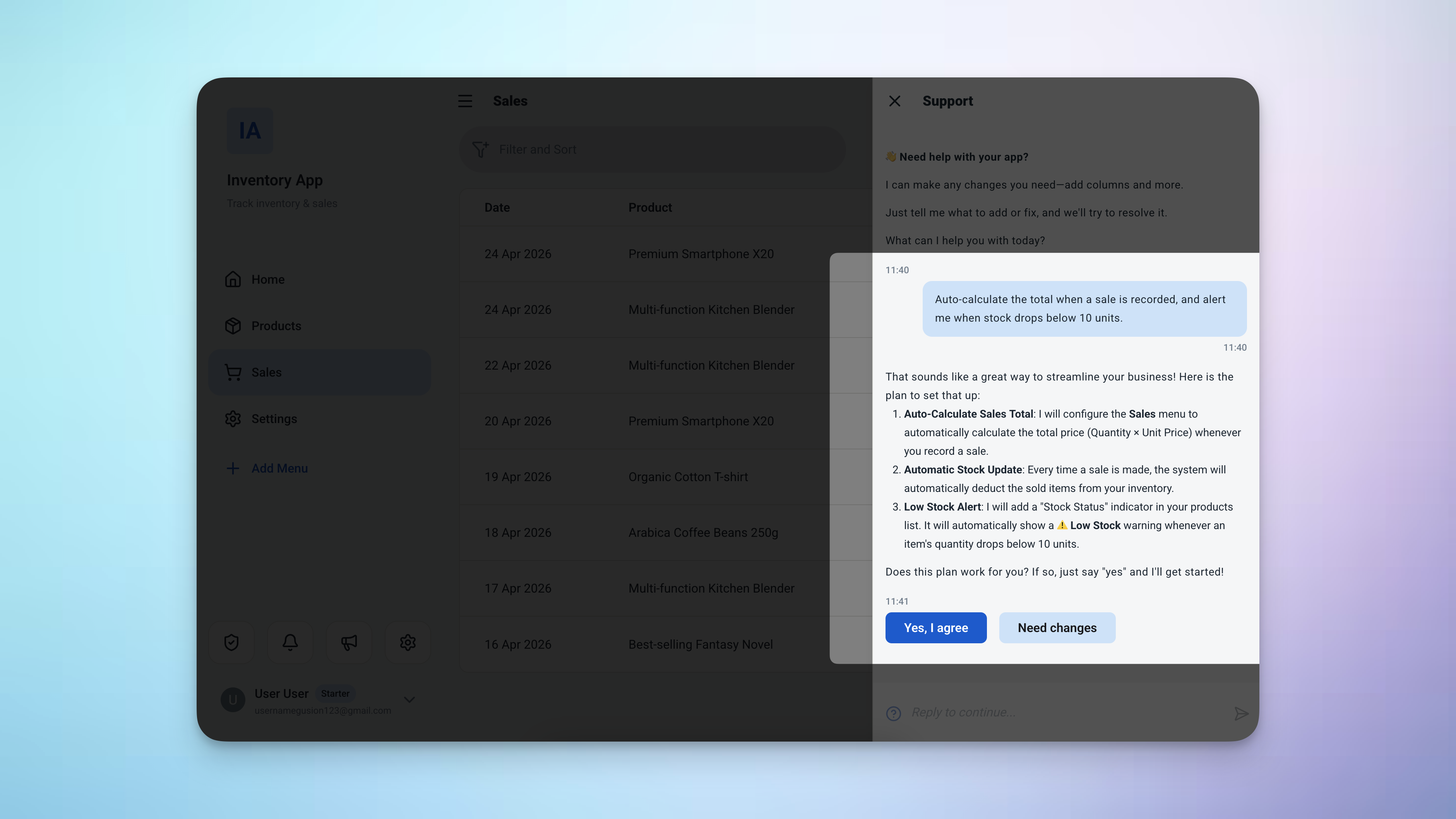
Describe your business in plain language — Ambisius builds the entire operational app for you automatically.
-
Built for what comes after the data existsStructured tables, automatic calculations, real-time dashboards, team access control, and smart alerts — all in one place.
-
Covers the full operational pictureInventory, bookings, invoices, staff collaboration, and customer-facing pages — without writing a single line of code.
-
No technical background requiredYou describe what you need — the AI handles tables, relationships, validations, dashboards, and analytics automatically.
Head-to-Head Comparison
How the two tools stack up across the things that matter most to a small business owner.
| Feature | Ambisius | Jotform Apps |
|---|---|---|
| Built for | Small business owners (SMEs) | Anyone needing forms & data collection |
| Setup | Chat with AI — full app ready in minutes | Drag-and-drop form & app builder |
| Technical skill needed | None | Minimal — but design knowledge helps |
| Core function | Full business operations management | Form-based data collection |
| Auto Calculation | ✅ Built-in | Limited — basic form calculations only |
| Data Relations | ✅ Built-in | ❌ Not available |
| Validation & Error Prevention | ✅ Built-in (range, overlap, uniqueness) | Limited — basic field validation only |
| Live Dashboard & Analytics | ✅ Built-in | Limited — basic form response reports |
| Team Collaboration | ✅ Per-menu, per-action access control | Limited — form sharing only |
| Notifications / Alerts | ✅ Condition-based smart alerts | Limited — form submission emails only |
| Internal Operations Management | ✅ Full (inventory, bookings, invoices, etc.) | ❌ Not designed for this |
| Customer-Facing Sharing | ✅ Publish as customer-facing app | ✅ Shareable forms & app links |
| Mobile App | ✅ iOS, Android, PWA | ✅ iOS & Android |
| Pricing model | Credit-based — pay for what you build | Per-form / per-submission tiers |
Detailed Breakdown
Four areas where the difference between the two tools is most felt by a real business owner.
1. Data Collection vs. Business Operations
This is the fundamental difference between the two tools. Jotform is exceptionally good at one thing: getting information from people. A customer fills out a form, the data lands in your dashboard, you get an email notification. That's the complete loop. What you do with that data after — how you track it, act on it, share it with your team, or analyze it over time — is largely outside Jotform's scope.
Ambisius is built for what comes after the data exists. When a booking is made, the system automatically calculates the end time, checks for conflicts, updates the dashboard, and alerts your team — all without you doing anything manually.
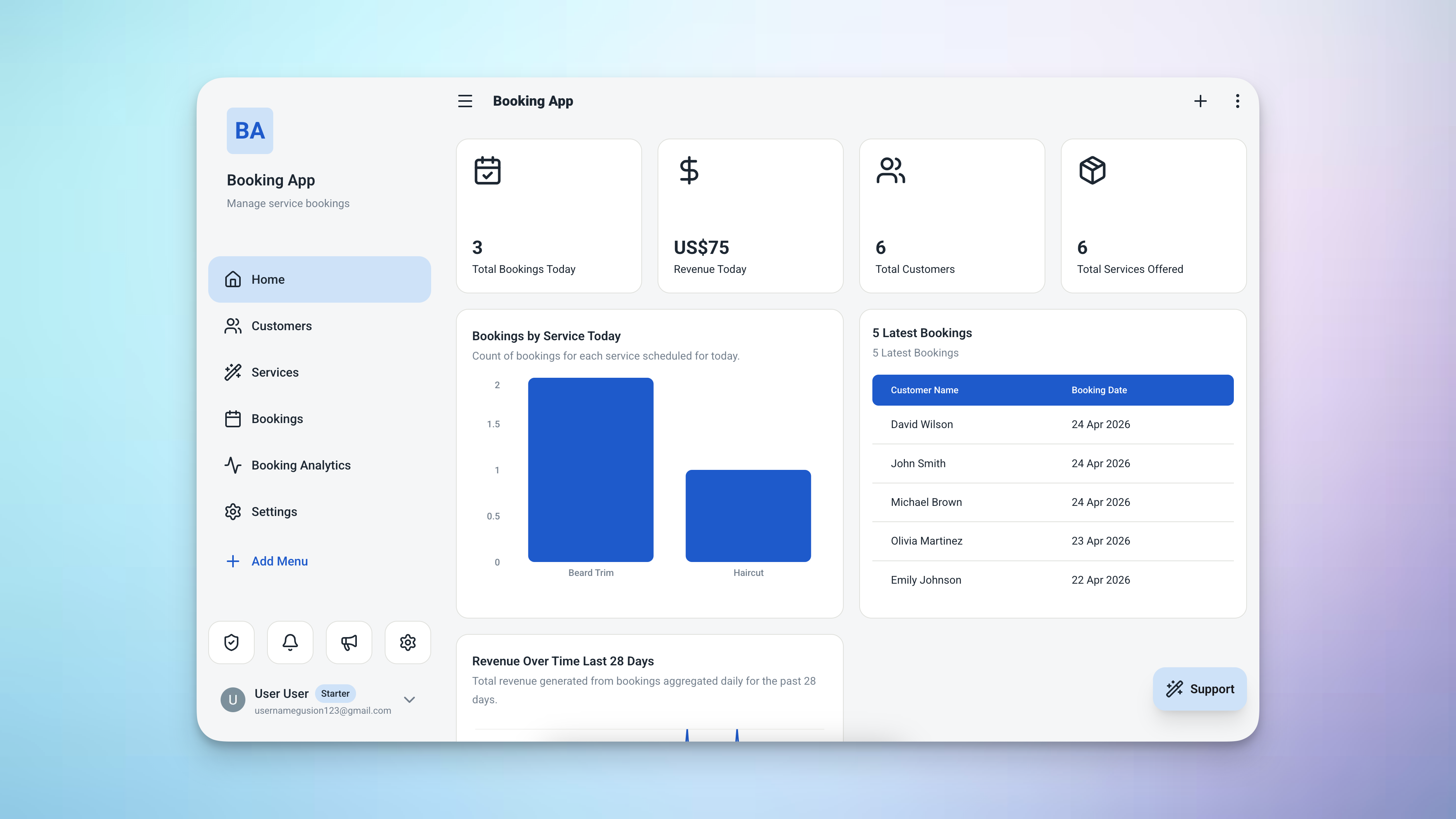
Ambisius gives you a live operational dashboard — not just a list of form submissions.
For a small business owner, the question isn't just "how do I collect this data?" — it's "how do I run my business on this data?" That's the gap Jotform leaves open, and where Ambisius steps in.
2. What Happens After the Form Is Submitted?
Let's make this concrete. Imagine you run a small salon and you're using a form tool to collect appointment requests. Here's how the two experiences compare.
| Step | With Jotform | With Ambisius |
|---|---|---|
| Booking received | Email notification — you check manually | Appears on dashboard instantly |
| Conflict check | You check your calendar manually | System checks automatically — blocks overlaps |
| End time | You calculate manually | Auto-calculated from service duration |
| Staff schedule | Separate spreadsheet or message | Staff sees their schedule in the app |
| Monthly reporting | Manual tally from exported data | Analytics page ready — bookings, revenue, trends |
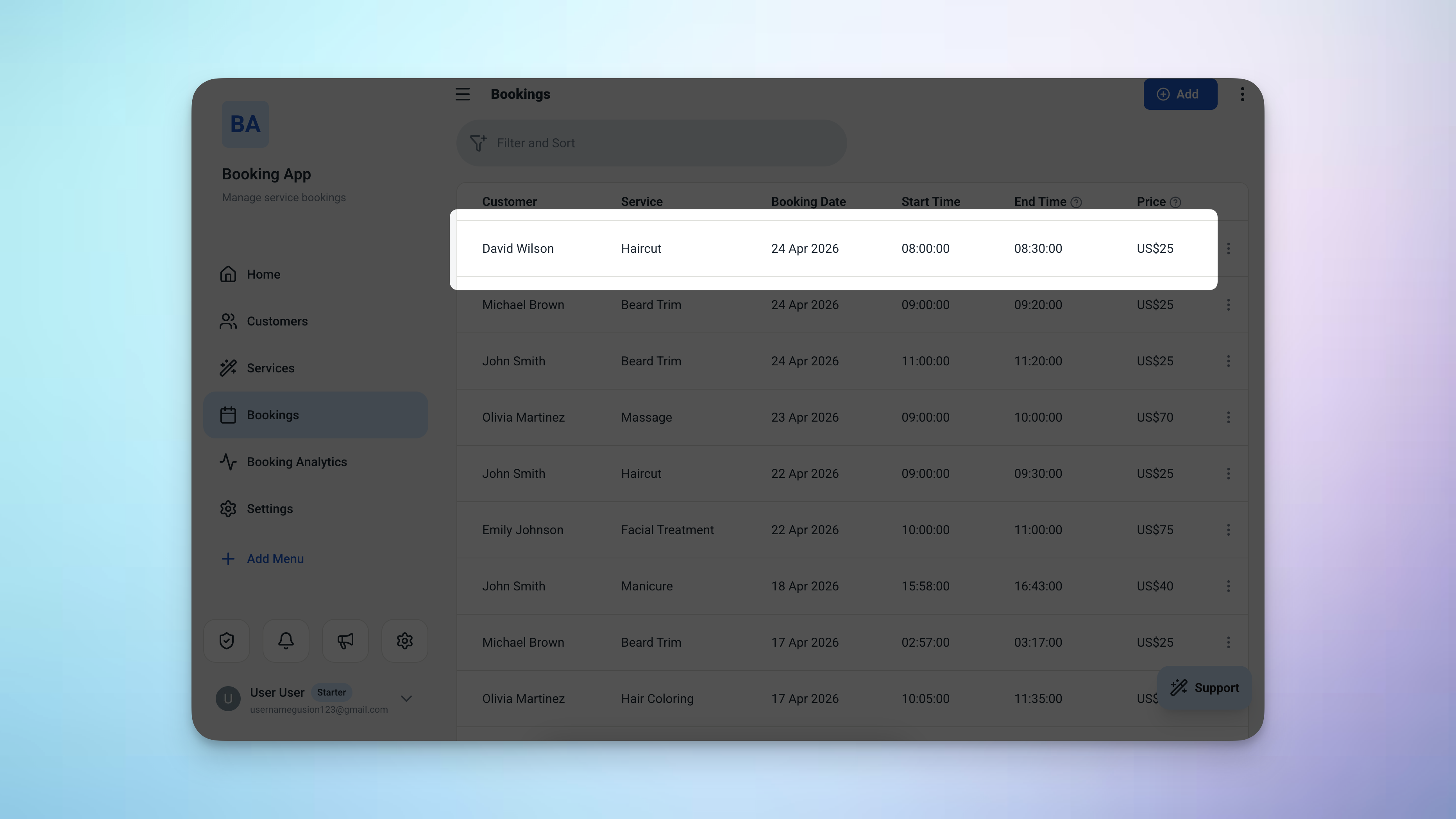
Your daily schedule in Ambisius — sorted, conflict-free, and ready the moment you open the app.
3. Built-in Business Logic vs. Manual Workarounds
Jotform has some calculation features — you can add a field that multiplies quantity by price inside a single form submission. But there's no concept of stock levels decreasing when a sale is made, no way to prevent a booking if a time slot is already taken, and no cross-record validation.
Ambisius has business logic built into its foundation — not as features you configure, but as how the app works by default.
Business logic in action — Ambisius blocks the sale automatically when stock hits zero.
4. Team Access: Sharing a Form vs. Running a Business Together
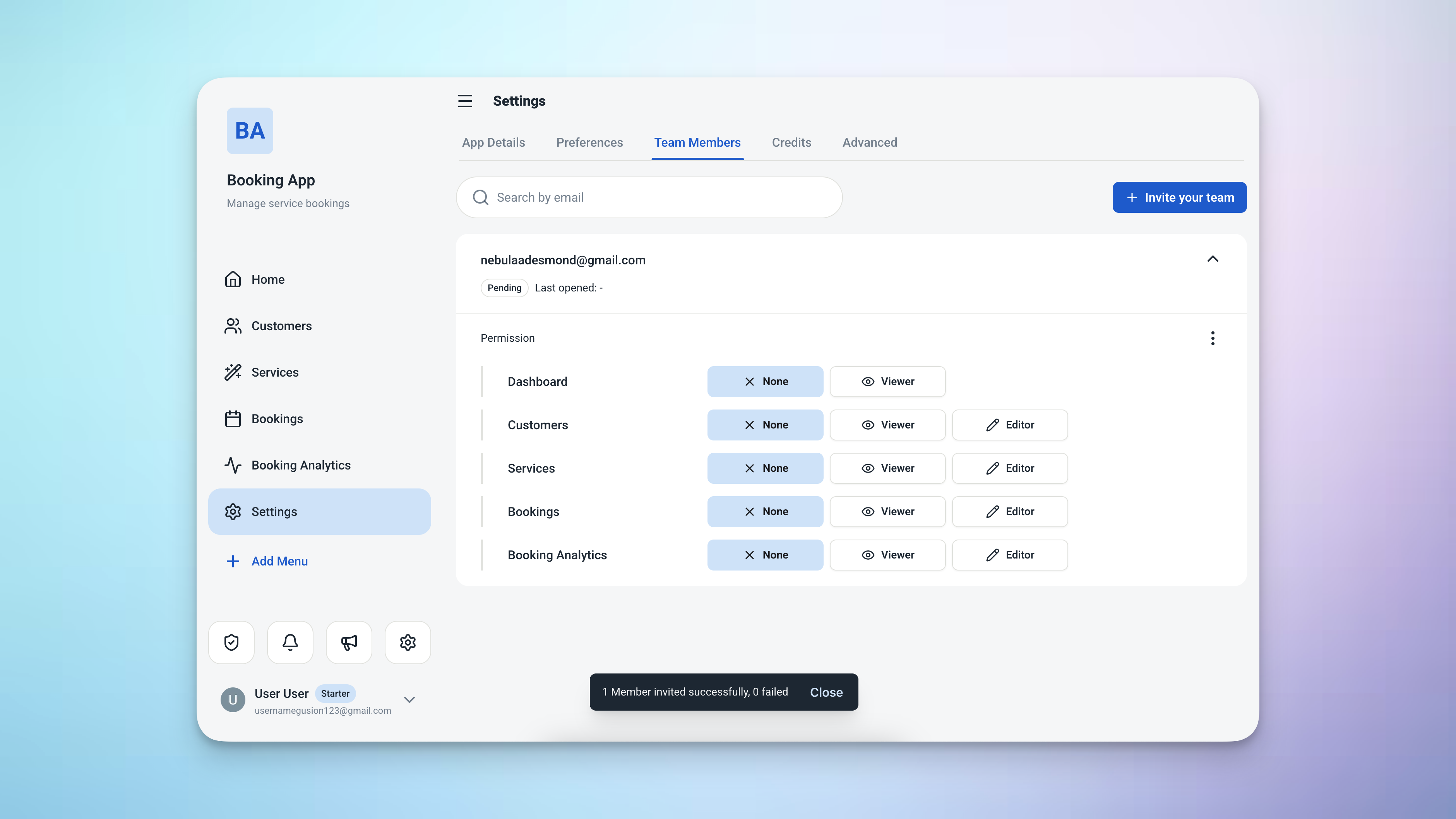
Jotform lets you share forms with your team and collaborate on form design — but it's not built for operational team management. There's no concept of a cashier who can add sales but not edit prices, or a warehouse staff member who can log stock but not view financial analytics.
Ambisius is built for exactly this. You invite your team and define — per menu, per action — exactly what each person can do.
Per-menu, per-action access control — your team does exactly their part of the job, nothing more.
| Role | Can Do | Cannot Do |
|---|---|---|
| Cashier | Add sales records | Edit product prices, delete records |
| Warehouse Staff | Log stock in | Access revenue analytics |
| Manager | View all menus and reports | Delete records |
| Owner | Full access to everything | — |
Your team uses the same app, on their own phones or computers, doing exactly their part of the job — while you stay in control of the sensitive stuff. That's not something a form builder was ever designed to do.
Verdict — Who Should Use What?
The right tool depends on whether you need to collect data — or run a business on it.
Choose Jotform if:
-
Your primary need is collecting data via formsCustomer orders, registrations, feedback, appointment requests — Jotform handles these quickly and cleanly.
-
You're running a one-off event or campaignFor fast, standalone form setups with no operational follow-up required, Jotform is hard to beat for speed.
-
You already have a separate system for operationsIf you just need a data entry front-end that feeds into an existing tool, Jotform's integrations with Google Sheets and payment processors are useful.
Choose Ambisius if:
-
You need a complete system to run your businessInventory, bookings, invoices, or client management — all in one place, built by AI in minutes.
-
You need business rules enforced automaticallyNo overselling, no double-bookings, no duplicate entries — Ambisius enforces your rules without you having to think about it.
-
You want real-time dashboards without spreadsheet exportsOpen the app and your operational picture is already there — metrics, trends, and today's schedule, live.
-
You want the customer-facing side and the backend in one toolA published booking or registration page for customers, plus the full operational system behind it — without stitching two tools together.
-
You want controlled team collaborationShare the app with your team while staying in full control of who sees and does what — per menu, per action.
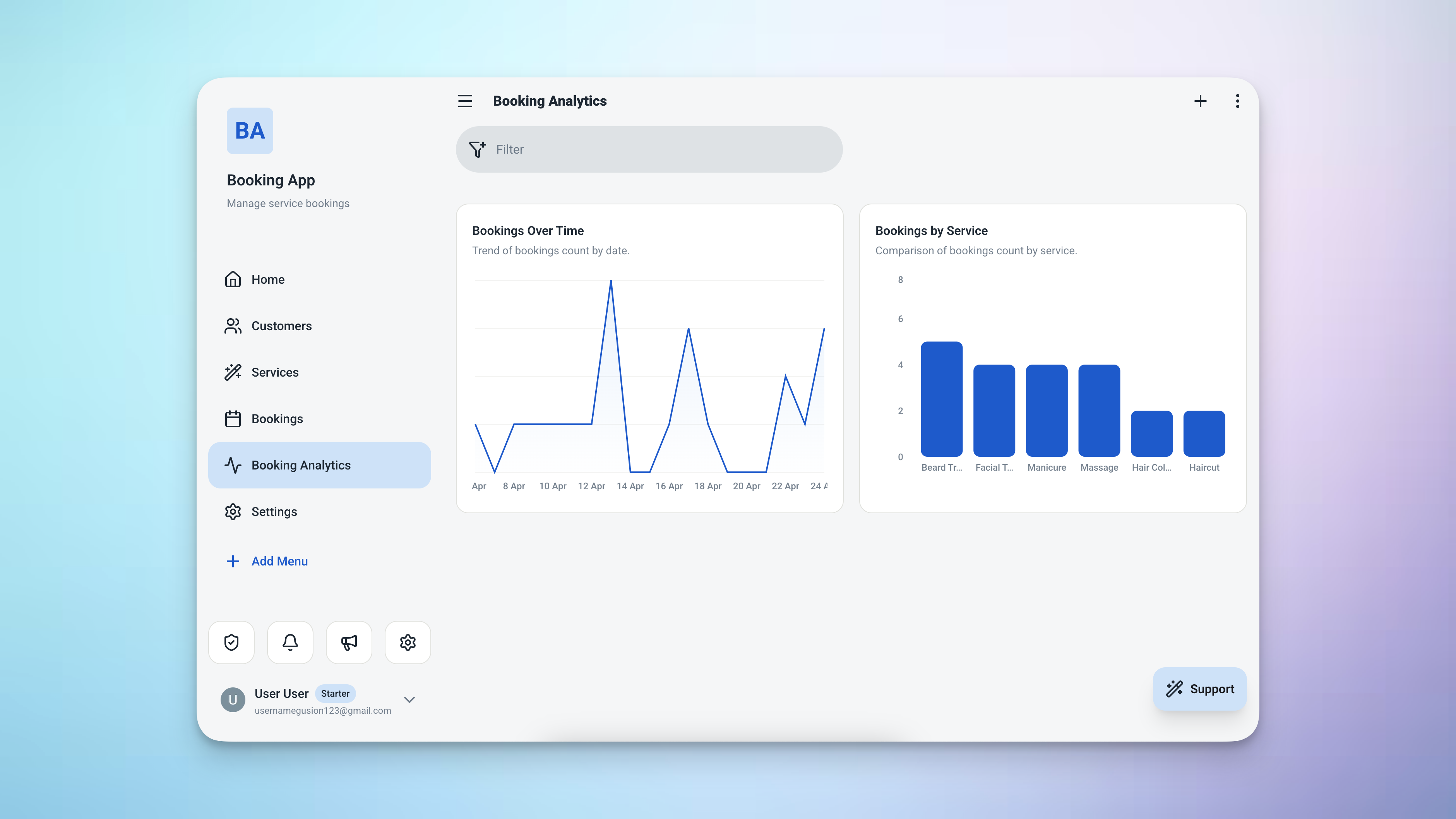
Ambisius analytics — revenue trends, booking volumes, and top services, all ready without a single export.
Go Beyond the Form — Ready in Minutes
Getting started with Ambisius takes minutes, not days.
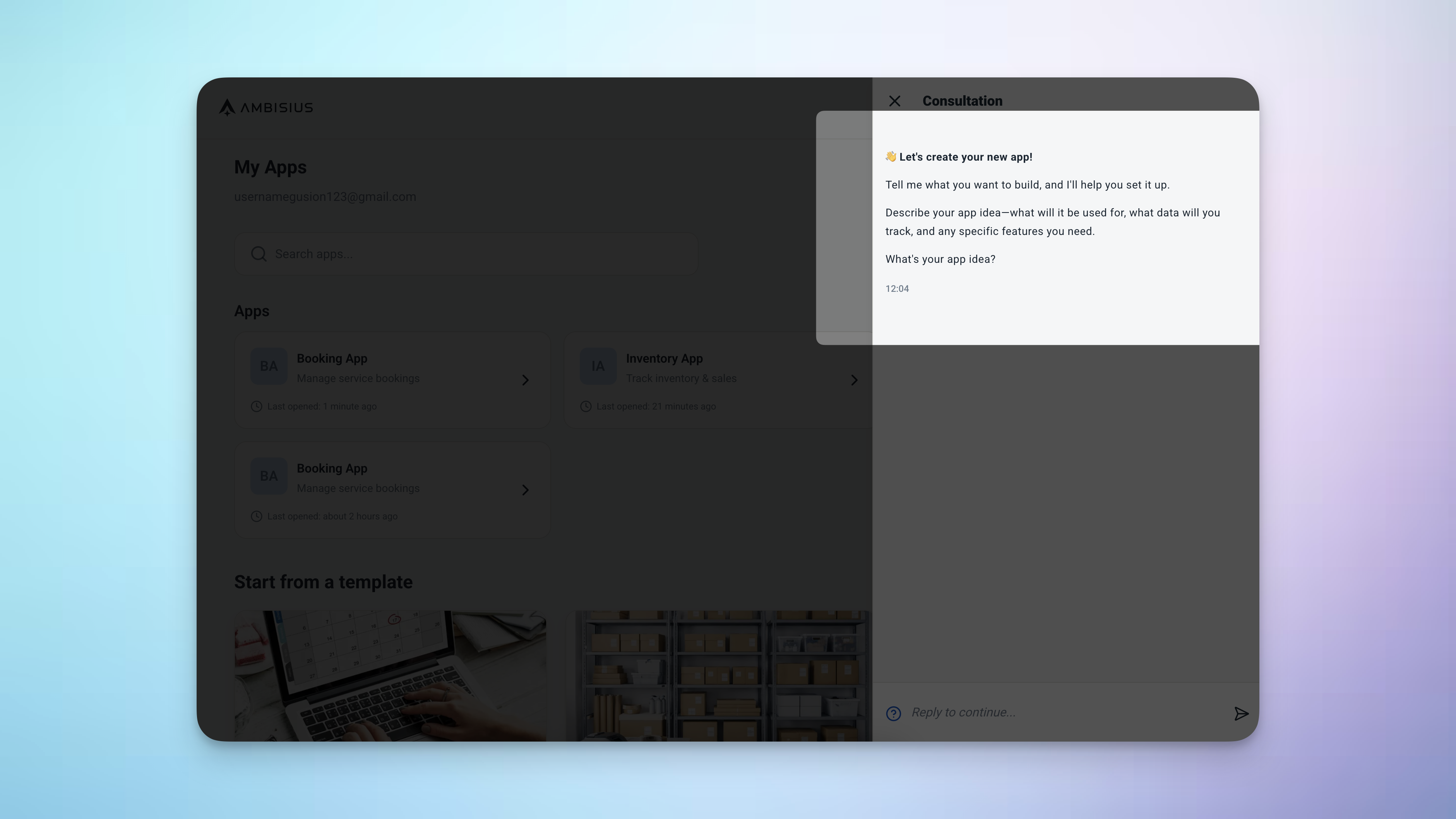
Start by describing your business — your complete operational app is ready before you finish your coffee.
Who Ambisius Is Built For
If you're piecing together form submissions with spreadsheets to run your business — Ambisius was made for you.
Frequently Asked Questions
-
Is Jotform good for small business operations?Jotform is excellent for collecting data from customers — orders, registrations, appointment requests. But it's not designed for business operations management. If you need to track inventory, manage staff access, prevent double-bookings, or monitor revenue on a live dashboard, you'll need a separate system alongside Jotform. Ambisius handles both the customer-facing side and the operational backend in one place.
-
Can I replace Jotform with Ambisius?If you're using Jotform primarily to collect customer data — bookings, registrations, orders — then yes, Ambisius can replace that with a published customer-facing page, while also giving you the full operational system behind it. If you're using Jotform for standalone surveys or one-off data collection with no operational follow-up, Jotform may still be the simpler choice for that specific task.
-
Is Ambisius free to use?Ambisius uses a credit-based model. Exploring the platform and chatting with the AI is free. Credits are only consumed when you confirm a change and the AI applies it to your app. New users receive free starter credits to get started without any upfront commitment.
-
Do I need coding skills to use Ambisius?No. You describe what your business needs in plain language — the AI builds the entire app for you. No formulas, no drag-and-drop configuration, no database setup required.
-
How long does it take to build an app on Ambisius?Most complete business apps — including tables, relationships, validations, a dashboard, and analytics — are ready in minutes. You can keep refining via chat anytime and changes are applied instantly.
-
Does Jotform Apps work as a full business management tool?Jotform Apps lets you bundle forms and links into a simple app interface, but it's not designed for internal business management. It doesn't support relational data, cross-record validation, role-based team access, or live operational dashboards. For those needs, a dedicated business app builder like Ambisius is a better fit.
The Bottom Line
Jotform is a great tool for what it was built to do — collect data from people, fast. But if you're a small business owner who needs to actually run your business on that data — track operations, manage your team, monitor stock, and see everything on a live dashboard — you need more than a form builder.
Ambisius gives you the complete picture: data collection, operations, dashboards, and team access — all built by AI in minutes, with no coding required.
